
Lab Handbook
How we work in the WEAVE Lab. Group members: bookmark this page and use it as a checklist.
Contents
Presentations
For every talk you give, from group meetings to conferences.
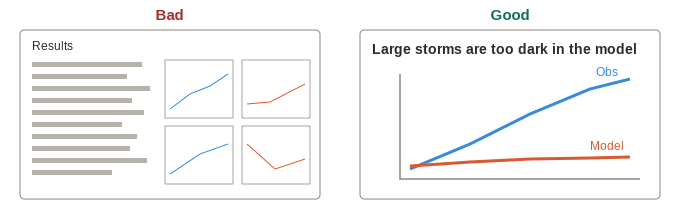
1. One slide, one message
Show everything, and you show nothing. A crowded slide means you don't know your point yet.
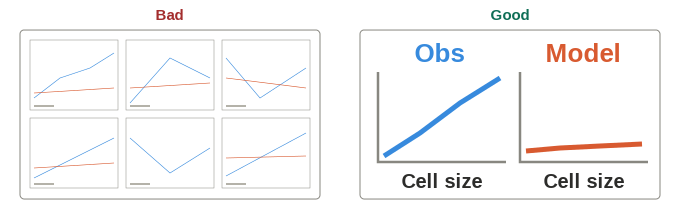
2. Big figures, big fonts
Stand in the audience's seat: design for the back row, not your laptop.
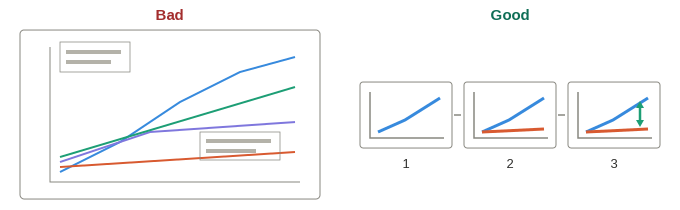
3. Build it up, tell a story
Storytelling is the core of a good talk. Reveal one piece at a time.
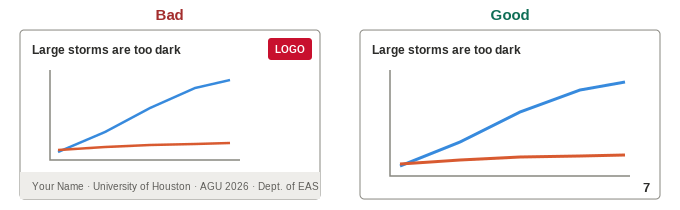
4. Number your slides; cut everything else
Page numbers let your audience point to a slide when they ask a question. Logos, your institute name, and the date on every slide are noise: they belong on the title slide, if anywhere.
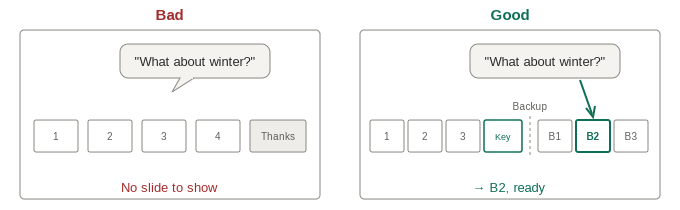
5. Keep backup slides for the questions you expect
Every talk has a time limit, so the main slides carry only what matters most. Everything else goes into backup slides after the end, ready for the questions you expect in Q&A.
6. Bonus: hook first, end on the takeaway
Not required, but it makes a good talk better. If you can say it in one sentence, you know what you want to convey.

Why these rules
Every rule comes from two ideas.
A talk is communication, not a judgment. Many students treat a talk as being judged, so they try to prove themselves by showing everything they did: many slides, many figures, every detail. That confuses the audience. A talk is you and your audience working together on a bigger question. Ask “What do they need to understand?”, not “How do I look?” Put the effort into your everyday work; in the talk, keep only what matters most.
Your audience owes you nothing. Most of the time, they don’t want to listen to you. Unless they are paid to be there, as a committee is, the only reason they stay is that your talk is worth their time. Every slide has to earn its place.
One-on-one meetings
For research updates with me. A quick question that takes a few minutes doesn’t need a meeting; just ask.
1. Think it through before we meet
Don't meet for the sake of meeting. Come with your own ideas.
Before we meet, work out what you want to discuss, what you think the answer is, and what you need from me. No freestyle. If you have no ideas of your own yet, you’re not ready to meet.
2. Schedule ahead, send slides 30 minutes before
I read your slides before we meet, so the meeting is spent on discussion.
Book a time with me in advance, and email your slides at least 30 minutes before the meeting.
3. Bonus: a story up front, every figure in the back
The best meetings find any figure we need in seconds.
Bring as many figures as you can. Ideally, the main slides tell the story, so that even reading them without you I can find the key takeaway. Figures outside the story go into supplementary slides at the end; when a new question comes up in our discussion, we can find the figure there quickly.