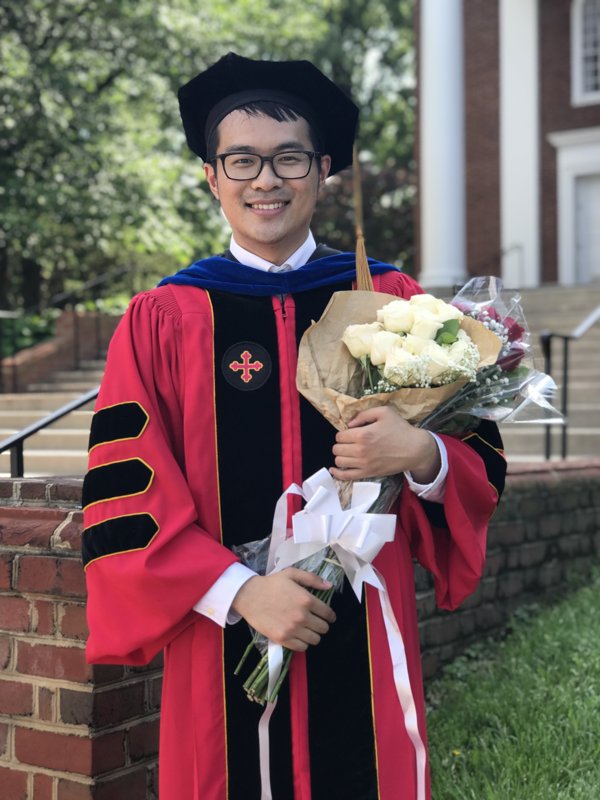
Teaching & Mentoring
Students understand the atmosphere best when they reason their way to it. Each lecture is built as a chain of questions, and at every turning point the question goes to the class. In large classes, live polls and short forecasting exercises with real weather maps keep everyone thinking.
Courses at the University of Houston

GEOL 1347: Introduction to Meteorology
High- and low-pressure systems, air masses, clouds, the jet stream, precipitation, air–sea interactions, local and global circulation, and weather analysis. A general-education course open to all majors.
“I was very fascinated with meteorology at a young age. I lived on the Gulf Coast and hurricanes blew through there. That is the class I failed in college: meteorology.”
— Jim Parsons, University of Houston alumnus
Taught: Fall 2023, Spring 2025, Fall 2026
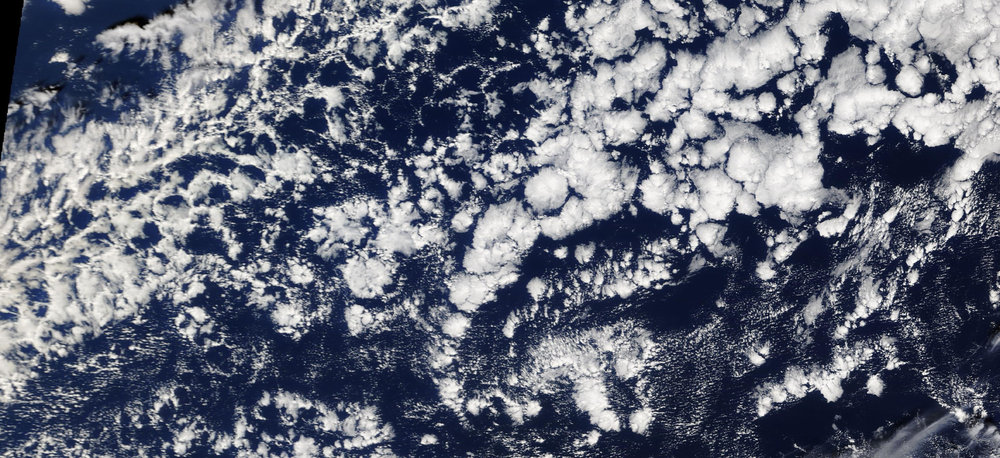
GEOL 4349/6397: Cloud Physics new course
How clouds form, how droplets grow into rain, and how clouds shape weather and climate.
Taught: Spring 2024, Spring 2025
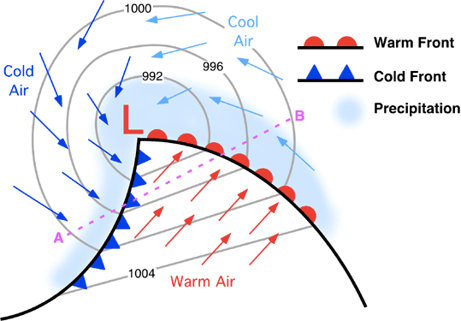
GEOL 4352/6397: Synoptic Meteorology (with lab) new course
The atmospheric processes behind winds, temperature change, and precipitation; the development and decay of mid-latitude storms and fronts, and their hazards. A core course of UH's new B.S. in Atmospheric Science.
Taught: Fall 2024, Fall 2025, Fall 2026
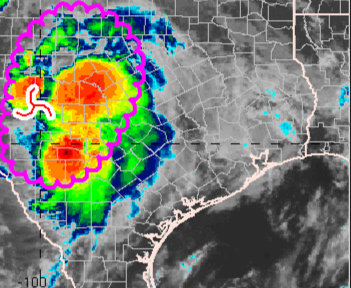
GEOL 6364/4333: Mesoscale Meteorology and Forecasting new course
Weather systems smaller than a cyclone but larger than a turbulent eddy, where extreme weather happens: thunderstorms, squall lines, and sea breezes, and how to forecast them.
Taught: Spring 2026
Mentoring
Students in the group own a real research question, with more guidance at the start and more independence as they grow. They are also trained for the field they will enter, through our weekly AI Agent Day (below).
Recent student honors include a DOE Office of Science Graduate Student Research (SCGSR) fellowship at Lawrence Livermore National Laboratory, an AMS Outstanding Student Presentation Award, national-laboratory summer internships, and several university scholarships and travel awards. Meet the group.
AI Agent Day
AI agents became capable research tools in 2026, and our students will spend their careers working alongside them. Since October 2026, the group has met every Friday afternoon to put agents to work on our own research. Each week, members show concrete work: what they tried, what worked, and what failed. The rules are simple: the language model proposes, trusted code computes, and the scientist decides. Every agent result is checked against evidence the agent did not make.
Latest session: #6, November 20, 2026: Check the figure, not just the numbers
- Oussama Romdhani, Can AI agents reproduce a published model figure?
- May Pyae Sone, Data validation: trust data because you tested it
Oussama built a small benchmark that asks AI agents to reproduce a figure from a published WRF study: vertical profiles of turbulent mixing in three simulations. He compared three levels of freedom: an agent that only assembles validated tools, one that writes a single script, and one that explores the data on its own, each with large and small models. The numbers came out right, but a physics mistake in one figure, plotting a mixing coefficient the model does not actually use, slipped through, because the grader only checked that an image existed. A vaguer prompt led to correct numbers being marked wrong over column names and rounding. The lessons: state the physical rule and the output format in the prompt, and check the figure, not just the numbers. May, an undergraduate in the group, added a validation step to her team of agents: before any agent may use the data, it fetches the same reanalysis fields a second, independent way, compares them with the locked archive, and shows her the plots for approval. She tested it on a dry year, a wet year, and a leap year. Her takeaway: “The data didn’t change. What changed is I can prove it.”